Stories & Case Studies
Columbia-Greene Community College (C-GCC) serves a rural, largely agricultural community in the Hudson Valley of New York. In 2021, the college joined the ATD Network as part of the Building Resiliency in Rural Communities for the Future of Work initiative cohort. Alongside six other cohort colleges, C-GCC has undergone campus-wide transformation not just to meet the current needs of its students but also to set them up for future success in a fast-changing workforce landscape.
Like many rural colleges responding to acute challenges in remote learning access since the COVID-19 pandemic, C-GCC has engaged in concentrated efforts to increase digital equity in recent years. As part of their work with the Rural Resiliency cohort, as well as the Institute on Digital Equity with the American Association of Colleges and Universities, the college has worked to ensure students in the region’s mountain towns are fully connected to C-GCC’s growing suite of online and flexible learning offerings. The college has also established a CARES (Concern. Assessment. Response. Evaluation. Support.) team that offers personalized support to students facing barriers to success, from food and housing insecurity to mental health concerns.
And to catalyze economic mobility for the community they serve, faculty members at C-GCC have been leading innovations in an unexpected place: the intersection of artificial intelligence (AI) and the humanities.
A catalyst for engagement
“Pretty early on, we jumped into the AI world and have embedded that into our humanities programming,” said Dr. Nikki Childrose, history professor and director of the Center for Innovation, Teaching, and Learning at C-GCC.
She and her team members were inspired by Dr. Ruha Benjamin’s plenary address at DREAM 2025, “Reimagining Opportunity: Higher Education as a Catalyst for Collective Advancement.” In fall 2025 they launched the AI in the Humanities course (which includes Dr. Benjamin’s book, Viral Justice, in the syllabus).
The class was immediately popular, and widespread interest in the subject matter has prompted C-GCC to expand beyond a single course. They offer the class as part of the college’s prison education program, and faculty have hosted several AI workshops at local high schools and even rotary clubs. C-GCC faculty were also invited to give two presentations to Greene County leaders about AI policy and equity, including hands-on training with licensed applications. Dr. Childrose said these presentations have helped the college learn more about the needs of adult learners serving the County.
“AI has been a really popular topic as far as getting the community engaged,” she said.
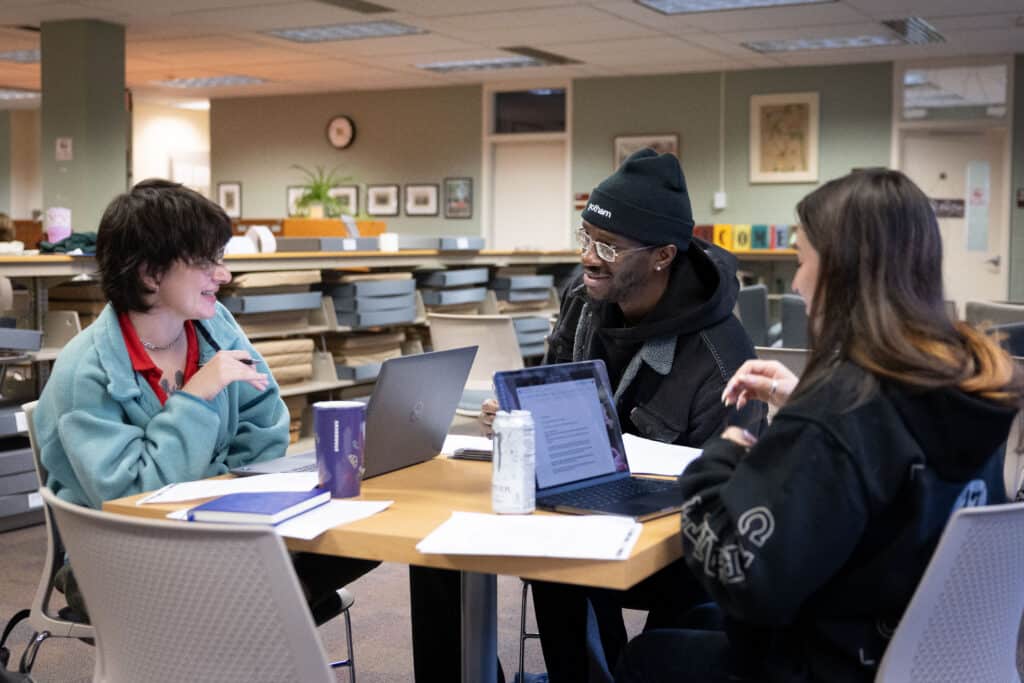
Photo courtesy of Columbia-Greene Community College
Momentum has only continued to grow. Faculty are now developing a curriculum for an applied digital studies program, a two-year humanities degree that focuses on digital content, civic engagement, and the philosophy and ethics of AI. And in fall 2025, C-GCC received a $50,000 grant from the NASH-Google Microcredentials Community of Practice initiative to further develop the AI curriculum and align courses to industry credentials. As of spring 2026, grant work is well underway: The college will shortly launch a microcredential for UX design and Google AI essentials, and more microcredentials are in progress.
“It’s clear that AI literacy is the direction we’re going,” Dr. Childrose said of C-GCC’s ongoing curriculum development.
“Filling up the vessel” — professional learning and sustained momentum
Dr. Childrose said that C-GCC’s “leap into the AI world” stemmed from the collaboration and ideation fostered by the college’s new Center for Innovation, Teaching, and Learning (CITL), where she serves as director.
The CITL was established in 2024 to offer resources, support, and professional learning opportunities to faculty. Dr. Childrose said that the college’s experience as part of the Rural Resiliency cohort reinforced the need for a more formalized structure to support faculty development.
She and her peers also completed ATD’s Strengthening Teaching and Learning Seminar Series. “That experience helped us build a shared foundation and vision for what faculty support could and should look like on our campus,” Dr. Childrose said.
Advancing Rural Student Success in the Digital Economy
Professional development is one of four essential conditions for success identified in Advancing Rural Success in the Digital Economy, a report from ATD and Education Northwest that shares outcomes and lessons learned from the seven Rural Resiliency cohort colleges.
Download the Report
In 2025, the CITL launched the Foundations program, which brings new faculty together in cohorts and then pairs those new faculty with a seasoned mentor. As a member of the SUNY system, the college is also active in the SUNY Center for Professional Development, and the CITL sends weekly emails to the campus community sharing professional learning opportunities.
Throughout the Rural Resiliency initiative, C-GCC worked closely with a community of peers in the six fellow cohort colleges. Dr. Childrose valued the discussions she had with faculty at other institutions who led their own centers for teaching and learning. “I feel like I have lifelong champions of the work that we’re doing, and professional partners in that work,” she said.
—
“As a rural-serving institution, the CITL has become something of a lifeline. It plays a critical role not only in supporting teaching and learning, but also in helping us recruit, onboard, and retain faculty. In a setting where resources can be limited and faculty may feel isolated, having a dedicated center creates a sense of connection, professional growth, and institutional support. It allows us to be more intentional in how we welcome new faculty, sustain engagement, and build a culture of continuous improvement in teaching.”
– Dr. Nikki Childrose, director of the Center for Innovation, Teaching, and Learning, Columbia-Greene Community College
While the CITL has connected C-GCC’s educators and practitioners to external opportunities, its ultimate mission — and sustaining contribution — is to create a space where they can invest in and support each other. In its first year, 44% of staff, faculty, and administrators engaged in the CITL’s offerings. An internal dashboard reporting on year one activity said that faculty engagement “through book clubs, workshops, and communities of practice reflects a growing culture of collaboration and innovation.”
The level of interest and participation in the CITL — and in the educational initiatives and innovations it has helped to launch — is entirely a product of the work that people have poured into it, Dr. Childrose said.
“The people are critical to sustaining this work,” she emphasized. “Part of the CITL’s role is to make sure that we’re filling up the vessel, you know? That we’re investing back into one another.”
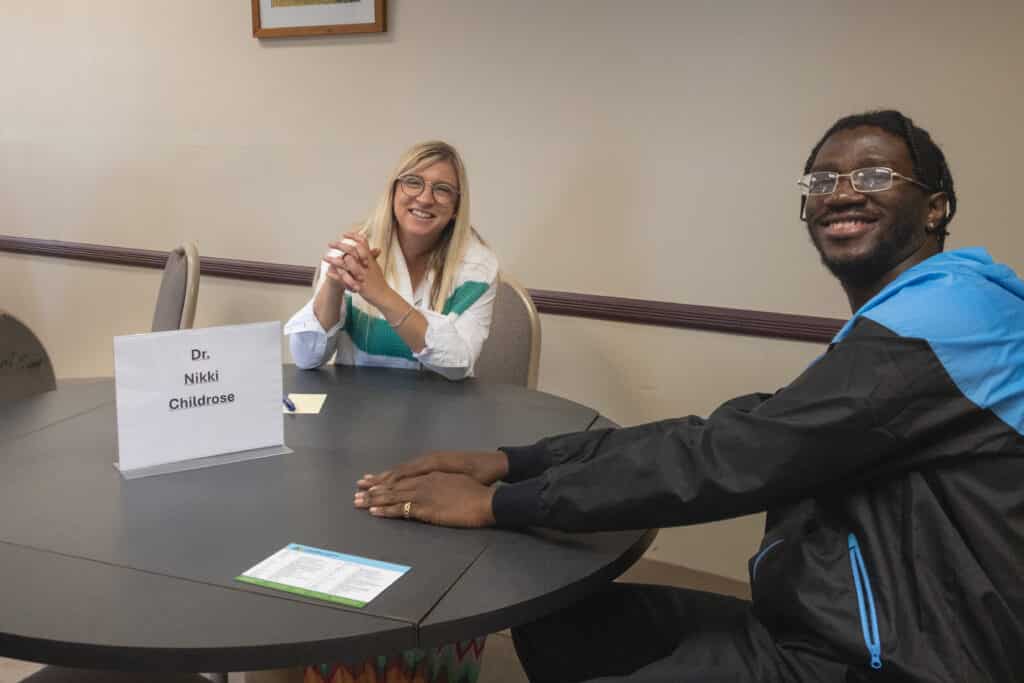
Photo courtesy of Columbia-Greene Community College
—
This blog post is part of a series that celebrates the work of seven rural colleges that participated in ATD’s Building Resiliency in Rural Communities for the Future of Work initiative, first launched in 2020. Through coaching, tools, and peer learning opportunities, the initiative aimed to strengthen institutional capacity, foster a culture of evidence, advance equitable student success, align programs with workforce needs, and prepare students for careers in the digital economy.
Learn More
 Research & Reports