 News & Updates
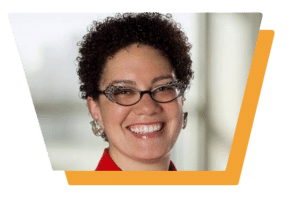
Suzanne Walsh, J.D., brings a lifelong connection to community colleges — and a deep understanding of their transformative power — to her new role as chair of the Achieving the Dream Board of Directors. From her own start at a community college to leadership roles in philanthropy and higher education, her career has been shaped by a commitment to expanding opportunity and strengthening institutions that serve as engines of economic mobility and community vitality. In this Q&A, Walsh reflects on what it takes to drive lasting institutional change, the critical role community colleges play in their communities, and how Achieving the Dream can continue to support colleges in an increasingly complex and rapidly evolving landscape.
“Communities thrive when community colleges thrive, and neither can thrive without the other.”
—
Q: Your connection to community colleges and the ATD Network spans your own education, early career roles, philanthropy, and board leadership. How have those experiences shaped your understanding of what community colleges need most to deliver on their promise today?
A: I think that when community colleges are at their best, the communities around them thrive. I saw that over and over again, whether as a student, the daughter of a community college professor, in my own experience working at Cuyahoga Community College, or having community colleges in my portfolio across foundations. It’s the same story. Communities thrive when community colleges thrive, and neither can thrive without the other.
I’ve seen community colleges be the center of an economic turnaround and sometimes the leader and convener of the business community, helping give confidence to business leaders and elected officials. Sometimes the role of the community college is to be the peddler of hope and possibility.
And what it does for students — we heard it from our DREAM Scholars [at the recent DREAM 2026 conference] — it gives people a sense of confidence they’ve never had before. It is the “pathway to possibility,” as Melinda French Gates used to always say. It is a life-changing opportunity. It gives a sense of belonging — not just in the academy but in contributing to family and community.
“Sometimes the role of the community college is to be the peddler of hope and possibility.”
—
Q: You’ve worked at the intersection of institutional leadership and large-scale reform initiatives, including Completion by Design. From that vantage point, what distinguishes efforts that truly lead to lasting institutional transformation from those that struggle to take hold?
A: For change to be durable, institutions have to go through the cycles of grief. If you haven’t been in denial about the data, argued about it, struggled with it, you haven’t done the hard work. Change requires wrestling with something and being challenged enough to rethink your response.
It’s about interrogating the data and doing root cause analysis. If you focus only on surface-level changes, the easy changes, they won’t last. The change that matters most is the structural work no one sees.
If I go all the way back to Completion by Design or the early days of Achieving the Dream, the work that mattered most was happening in spreadsheets, behind the scenes. Outcomes change because of that invisible work, not big public gestures. It’s your data people; it’s all your frontline staff who have to work in those systems — the roles that are never recognized; that’s who creates durable change.
On the leadership side — and this is one of the pieces in the updated ICAT [Institutional Capacity Assessment Tool] that I love — it also requires discipline — staying focused, not losing sight of what’s working, and maintaining the systems that support students. The experience students have depends on that behind-the-scenes work being strong. The stuff that ultimately lands beautifully with a student — that “warm and fuzzy” front — that comes from all the behind-the-scenes stuff, and you can only be warm and fuzzy up front if you’ve got your act together behind the scenes.
Q: As president of both a historically Black liberal arts college and now an urban-serving university, you’ve led in very different institutional contexts. What lessons from those experiences are most relevant to advancing equity and sustaining student success across the community college sector?
A: I think that many people think that community colleges are somehow a separate, unrelated part of higher education, when, in fact, especially for a place like Bennett College that is serving the same kind of students, that’s not the case. Bennett isn’t a highly selective institution. Seventy-five percent of the students receive Pell.
So, I’m not sure it’s what I learned at Bennett or City University [of Seattle] that informs my work with community colleges. It’s what I’ve learned from community colleges that has informed my work in those two areas.
For my current work at CityU, for example, I’m really interested in learning from ATD colleges, especially around the Community Vibrancy Framework, as I think about the next strategic direction for the university and think about partnerships with community colleges.
“The change that matters most is the structural work no one sees.”
—
Q: You’re stepping into the board chair role at a moment when community colleges are being called on to do more than ever — support basic needs, respond to workforce shifts, and strengthen community vitality. How do you see Achieving the Dream’s role evolving to support colleges in this ever evolving and complex landscape?
A: I’m not sure [the responsibilities of community colleges] are expanding so much as they’re continuing in new contexts. Community colleges have long been addressing basic needs, workforce, and community vitality. The question is: what does that look like in this moment? Colleges need to pause and re-evaluate whether their approaches still make sense. The priorities aren’t changing, but the methods might need to. Again, I come back to discipline. There’s a discipline to pausing, re-evaluating, and thinking about not just today but anticipating the future, and ATD has been increasingly focused on disciplined implementation, as I mentioned before.
Q: Looking ahead, what excites you most about ATD’s potential impact under this new slate of board leadership?
A: I’m excited about the diversity of perspectives, experiences, and types of institutions represented on the board and the willingness to disagree and work toward consensus. That makes a strong board and a strong organization. If you have a board where everybody is always agreeing all the time, that’s not a great board.
I think what we’ve done really well with [ATD President and CEO] Karen [Stout]’s leadership is supporting and being thought partners — not diving too deeply into the daily operations. So, I love a board that understands its roles.
We’re also excited about the leadership transition and supporting Lenore [Rodicio, ATD’s incoming president and CEO]. We’re thrilled to see where this takes us in this “next climb” as Karen calls it. We see it as a continuation and a build. It’s not a hard reset with everything changing. But it’s not a copy and paste either. I look at it as someone bringing in the next set of ideas and experiences that will help us continue on an upward trajectory, and I’m very excited.
Q: Is there anything else you would like to comment on?
A: Back to my theme about behind the scenes, none of the work at Achieving the Dream happens without the amazing staff at Achieving the Dream. Collectively, [the board] may not know everyone’s name, but we know the work; we see the work, and we realize — someone incredible made that happen. Each one of you contributes to an incredible environment for our colleges to be successful and for the students, like our DREAM Scholars, to be able to fully achieve their dreams. So, a big, big thank you to all of you.