 Stories & Case Studies
During Community College Month, Achieving the Dream is spotlighting voices from its Leader Colleges and Leader Colleges of Distinction — exemplary institutions leading the way in advancing student success. Through a monthlong series organized around four themes, these stories highlight how progress happens at every level of an institution.
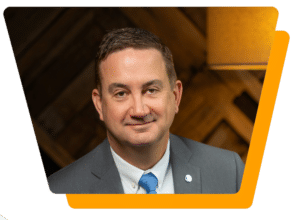
Our Leaders Listen spotlights center the perspectives of college leaders who are working to ensure that student voices actively shape institutional priorities, policies, and practices. In this blog, we hear from Dr. David May, president of Bellevue College (Washington), whose reflections underscore the importance of designing systems that truly reflect the realities of students’ lives — and the responsibility of leadership to respond when they don’t.
Q: What have you learned about leadership by listening to students?
A: Listening to students has changed how I think about leadership. It is easy to mistake student struggle as a problem of effort when it is often a problem of design. What works on paper does not always work in the lives of the people we serve.
Students are often the first to show us where that gap exists — not through formal feedback, but through the points where they get stuck, disengage, or leave. If we are paying attention, those moments are not failures on the part of students. They are signals about where our systems are not working as intended. What I have learned is that leadership is not just about setting direction; it is about paying attention to those signals and being willing to change how we operate in response. Those moments should tell us more about the institution than they do about the student.
Q: How do you ensure that student voices are part of leadership conversations and institutional strategy?
A: Students have been clear that they do not experience the college as separate offices or services. When something breaks down, whether it is financial, academic, or personal, it affects everything.
That has led us to listen more closely to what students are actually asking for, rather than relying only on how we have structured support in the past. In some cases, that has meant creating new spaces and programs that reflect students’ identities and experiences.
For example, student advocacy led directly to the development of Umoja [a program dedicated to enhancing the cultural and educational experiences of Black, African American, and other students) and Puente [a program dedicated to advancing the education of Latinx students] here at Bellevue College, creating more intentional community and support for students who had been asking for something different than what we were offering. We also expanded access to prayer space on campus after hearing that existing options did not meet students’ needs.
These are not large structural changes on their own, but they reflect a larger responsibility. When students tell us something is not working, our job is to respond in ways that are visible and meaningful, that go beyond just acknowledgement.
“It is easy to mistake student struggle as a problem of effort when it is often a problem of design.”
—
Q: Community colleges serve incredibly diverse learners. How does leadership at your college work to meet students where they are while helping them move toward their goals?
A: Community colleges serve students whose lives are often far more nuanced than the systems we’ve built. Meeting students where they are is not about lowering expectations. It is about designing pathways that recognize the reality of their lives and allowing them to move forward.
That tension is real. Flexibility without structure can leave students wandering. Structure without flexibility can push them out. Our responsibility is to hold both.
That shows up in the choices we make. For example, we moved to guided self-placement in math and English so students can make more informed decisions about where to start, rather than being placed by a single measure that may not reflect their full ability. That shift respects students’ understanding of their readiness while still providing clear direction.
We are also working to build clearer schedules, supports, and program pathways that reflect the reality that many of our students are working, caring for families, and navigating uncertainty. Progress should be possible without requiring students to step out of their lives to achieve it.
When we get that balance right, students are not choosing between their responsibilities and their goals. They are able to move toward both.
“When students tell us something is not working, our job is to respond in ways that are visible and meaningful, that go beyond just acknowledgement.”
—
Q: During Community College Month, what do you wish more people understood about the impact of community colleges in their communities?
A: During Community College Month, I wish more people understood that community colleges are not just pathways to jobs. They are often treated that way, but it misses a much larger role.
Community colleges are deeply connected to the communities they serve. We prepare students for work, but we also help build more connected, informed, and resilient communities. That idea is reflected in the Community Vibrancy Framework developed by Achieving the Dream, and it is not abstract for us. It is embedded as a pillar of our strategic plan at Bellevue College.
Our impact shows up in who has access to opportunity, how communities stay connected, and whether people see themselves as part of something larger than their individual path. When community colleges are strong, communities are stronger. Not just economically, but socially and civically as well.