 Stories & Case Studies
During Community College Month, Achieving the Dream is spotlighting voices from its Leader Colleges and Leader Colleges of Distinction — exemplary institutions leading the way in advancing student success. Through a monthlong series organized around four themes, these stories highlight how progress happens at every level of an institution.
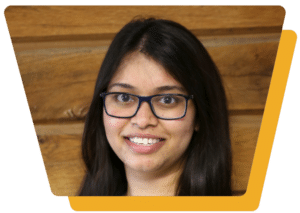
Through our Support in Action blogs, we highlight the staff members who help create the conditions for student success — whether working directly with students or strengthening the systems and supports that guide their journeys. In this spotlight, we hear from Kavya Mariboyina, director of institutional effectiveness at Little Priest Tribal College (Nebraska), whose work turns data into insight and action — helping the college better understand students’ experiences and remove barriers along their paths.
Q: How does your work help the college better support student success?
A: In my role, I focus on making data meaningful — turning numbers into a clear picture of what students experience every day. At a Tribal College, success isn’t just about finishing courses or hitting retention targets. It’s also about creating a space where we can build a shared language around data, so everyone from faculty to staff can see and understand the story behind the numbers. By looking closely at trends in enrollment, course patterns, and student progression, we can identify where students are likely to face barriers and work together to provide the right support. Ultimately, it’s about using what we learn to shape a college environment where every student has a real chance to succeed.
Q: Student success depends on many parts of a college working together. How does your office help bring different teams or departments into alignment around that goal?
A: One of the most important things we do is create a shared language around student success. Each department sees a different part of the student journey, and without intentional alignment, it’s easy for those efforts to feel disconnected from the full student experience.
We use data as a connector — not as a compliance tool but as a conversation starter. Whether it’s dashboards, disaggregated outcomes, or cohort tracking, we bring teams together to look at the same information and ask the same questions: Where are students getting stuck? What can we do together to improve this?
At Little Priest Tribal College, this has meant engaging faculty, student services, and leadership in ongoing dialogue rather than one-time reporting. Alignment doesn’t happen through mandates, it happens through shared understanding, and that’s where our office plays a critical role.
“We use data as a connector — not as a compliance tool but as a conversation starter.”
—
Q: Community college students often balance work, family, and school. How does your team use data or insights to help the college better understand and respond to those realities?
A: Community college students often balance work, family, and school, and that’s especially true for our students. Many are part-time, first-generation students who are working, taking care of their families, and managing a lot at once. If we don’t really take that into account, we end up creating systems that don’t reflect their actual journeys or the ways they succeed.
So, we try to look beyond the usual metrics. We spend time understanding patterns — how students enroll, when they stop out and come back, and what kinds of course combinations they’re taking. For example, our research into “toxic course combinations” showed that it’s not just individual courses that create challenges but how certain courses overlap within a student’s schedule. Insights like these help shift the conversation from “Why are students struggling?” to “How are we structuring their experience?” That shift leads to more responsive scheduling, better advising, and more intentional program design.
“What excites me most is seeing how small, thoughtful changes like better course sequencing, clearer pathways, or policies designed with students in mind can remove barriers that might have gone unnoticed. When those barriers are lifted, students don’t just stay enrolled — they thrive.”
—
Q: Can you share an example of how your office helped the college make a change for students?
A: One example I’m especially proud of is how we rethought graduation metrics for part-time students. Many of our students balance work, family, and other responsibilities, which means they often take longer to finish their degrees or stop out and return. The traditional cohort-based reporting systems didn’t fully capture their journeys, so their success often went unnoticed.
Our office developed a more inclusive framework that looks at measure like the median number of attended semesters to graduation, rather than relying solely on standard cohort timelines. This allowed us to recognize the achievements of students who take a non-linear path and ensure their progress is visible in our planning and reporting. By redefining these metrics, we could better understand and support all students — especially part-time learners, so the college can make decisions that truly help them succeed.
Q: What inspires you about working behind the scenes to help students thrive?
A: What really inspires me is knowing that even though a lot of this work happens behind the scenes, it actually makes a difference in students’ lives.
At a Tribal College, that impact feels even more personal. Success isn’t just about finishing courses or hitting graduation milestones; it’s about supporting students who are juggling school, family, work, and cultural responsibilities all at once. It’s about honoring their resilience while making the system easier to navigate.
What excites me most is seeing how small, thoughtful changes like better course sequencing, clearer pathways, or policies designed with students in mind can remove barriers that might have gone unnoticed. When those barriers are lifted, students don’t just stay enrolled — they thrive. Being part of that process, quietly helping make their journeys a little smoother, is incredibly meaningful to me. And I’m grateful that my work contributes not just to individual student success but also to strengthening how Tribal Colleges use data to support their communities.