 Stories & Case Studies
During Community College Month, Achieving the Dream is spotlighting voices from its Leader Colleges and Leader Colleges of Distinction — exemplary institutions leading the way in advancing student success. Through a monthlong series organized around four themes, these stories highlight how progress happens at every level of an institution.
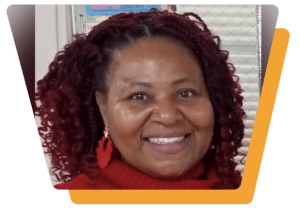
Through our Teaching That Transforms spotlights, we showcase faculty who design learning experiences that are responsive, practical, and grounded in students’ real-world goals. In this Q&A, Chrisola Ham, Social and Human Services program chair and instructor at Halifax Community College, reflects on a journey from K–12 education to the community college classroom and shares how a focus on clarity, flexibility, and individualized support helps community college students, who are often at critical points in their lives, build confidence and make meaningful progress toward their futures.
Q: What inspired you to teach at a community college?
A: My desire to teach at a community college developed later in my career. After spending about seven years teaching at the high school level, I decided to return to school to pursue my graduate degree in social work. During that experience, I came to appreciate that education not only helps you discover what you want to do but also what you may not want to pursue.
While working toward my M.S.W. and continuing to teach high school, I found myself increasingly drawn to the community college environment. I have always valued being part of high school students’ preparation for the next stage of their lives. However, teaching at a community college offers a unique opportunity to witness that preparation come full circle — to see students actively navigating and shaping their futures. That ability to support students at such a pivotal point in their journey is what ultimately inspired me to pursue teaching at the community college level.
“I believe in meeting students where they are, recognizing that there is no one-size-fits-all method to instruction.”
—
Q: What does student-centered teaching look like in your classroom?
A: Student-centered teaching in my classroom means designing instruction around student needs, learning styles, and career goals. I prioritize clarity, accessibility, and real-world application of course content. I also remain responsive to feedback and adjust instruction when needed to ensure students fully grasp key concepts.
Q: Is there a change you’ve made in your teaching that has made a meaningful difference for students?
A: One meaningful change I have implemented is creating short instructional and support videos that provide tips for success in the course. These videos clarify assignment expectations, explain common mistakes, review key concepts, and offer strategies for time management and exam preparation.
“I am especially inspired by the chance to help students build confidence, develop practical skills, and take meaningful steps toward their futures.”
—
Q: Community college classrooms often include students with many different life experiences. How does that shape your teaching approach?
A: I have had the opportunity to teach in public schools across three different counties, including two separate schools within the same county. Across each setting, the overarching goal has remained consistent: to support students in graduating high school and preparing for their next steps, whether that be the military, higher education, or the workforce. However, what varies greatly among students are their belief systems, values, cultures, and life experiences.
These differences strongly shape my teaching approach. I believe in meeting students where they are, recognizing that there is no one-size-fits-all method to instruction. Instead, I strive to implement a structured yet individualized approach that is responsive to each student’s background and needs. By doing so, I create an inclusive learning environment that respects diverse perspectives while supporting all students in achieving their goals.
Q: What is the most rewarding part of teaching community college students?
A: My professional and educational background, which spans approximately 25 years working primarily with school-aged children and adolescents, has shaped me into an open-minded and empathetic educator. As I have grown in my career, I have developed a strong passion for lifelong learning and a desire to expand my impact within higher education.
The most rewarding part of teaching community college students is the opportunity to support them as they define and pursue their educational, personal, and professional goals. Many students at this level are navigating pivotal transitions, and it is incredibly fulfilling to play a role in that process. I am especially inspired by the chance to help students build confidence, develop practical skills, and take meaningful steps toward their futures. I believe community colleges are uniquely positioned to provide transformative opportunities, and it is deeply rewarding to be part of an environment that empowers students to grow and thrive both inside and beyond the classroom.