 Stories & Case Studies
During Community College Month, Achieving the Dream is spotlighting voices from its Leader Colleges and Leader Colleges of Distinction — exemplary institutions leading the way in advancing student success. Through a monthlong series organized around four themes, these stories highlight how progress happens at every level of an institution.
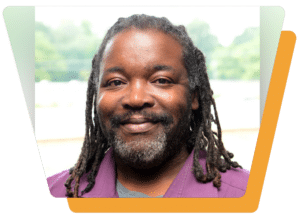
Through our Teaching That Transforms spotlights, we feature faculty who are creating meaningful learning experiences that help students see themselves — and their potential — in the classroom. In this Q&A, Thomas King, professor of communication and theatre and program coordinator for theatre at Southwest Tennessee Community College, shares how his approach to teaching builds connection, encourages ownership of learning, and helps students recognize what they are capable of achieving.
Q: What inspired you to teach at a community college?
A: To be honest, it was a combination of luck — both good and bad — casual conversation, and some aspect of kismet more than any sort of inspiration at first. My story is one that I often tell about how my school pretty much saved my life, and that became the catalyst of my devotion to the community college way.
After grad school in the ’90s, I went into the corporate and nonprofit worlds, but most of my roles had some aspect of being an educator or trainer. Then in 2013, while I was between jobs, a friend told me Southwest was looking for adjuncts. I applied, started teaching, and eventually was hired full-time. Southwest kept me working when my savings were depleted; it really sustained me.
At first, teaching felt like a necessity and a duty. But that shifted early on when a student told me she had never had a Black or African American male teacher before. That made me realize that I was representing something that was bigger than myself — that I was, in a way, an influential figure in education.
That moment really struck me. It shifted teaching from something I was doing to survive into a calling. It made me understand the responsibility I carry, and that’s something I’ve held onto ever since.
Q: What does student-centered teaching look like in your classroom?
A: At the start of every semester, I stress an Igbo proverb: “It takes a village to raise a child.” But, I tell my students I don’t consider them children — but the idea is about support. It means everyone in the class should look out for each other and help each other succeed.
That mindset underscores a shared responsibility to uplift and support each other as a community of learners.
I also build in ways for students to take ownership of their learning. For example, in my communication class, I’ve had students write a justification paper where they argue what grade they deserve based on the work they’ve done. It’s about developing critical thinking and learning how to advocate for themselves — especially important for many community college students who may not know they can do that.
In my classes, students also teach. I have group “lectures” where students instruct their classmates, and the material they teach shows up on exams. So their engagement directly impacts how well the class does.
In my theater class, one of the first assignments is called Find Your Story, where students research several plays or musicals that connect to their own lives, future careers, or identities. It’s about helping them connect to the world of theater by seeing themselves in the material — because representation matters.
And depending on the course, I tailor the experience to the student. In upper-level classes especially, it’s fully student-centered — I’m helping each student develop the specific skills they need, rather than expecting everyone to learn in the exact same way.
“My goal is to elevate students — to challenge them and give them the means to rise.”
—
Q: Is there a change you’ve made in your teaching that has made a meaningful difference for students?
A: I don’t know if it’s a change so much as a realization, but it happened early on and has shaped how I’ve taught ever since. It’s about showing up for students and being, for some of them, possibly the only adult who listens to their opinions and values what they have to say.
I didn’t initially realize what I represented to students walking in the door. For some, I may be the first Black male teacher they’ve ever had. For others, I’m also a safe space — I’m a safe zone instructor, and I become an ally for students who need that. Understanding that has really shaped how I approach the classroom.
Another piece is how I balance support and accountability. I allow grace, but then I focus on helping students learn how to overcome obstacles. The subject matter matters, but if they can’t navigate the world with honesty and resilience, that’s doing them a disservice.
I’ve also built more intentional community in my classes. Using that “village” concept, I put students into small groups that function as support systems — study groups, project groups, people they can rely on. Students have told me they’ve never gotten to know others in their classes before, and this changes that.
In my speech classes, I spend time helping students learn each other’s names and build connections. That interaction makes them more comfortable, more engaged, and more willing to participate. It creates an environment where they feel like they belong.
Ultimately, my goal is to elevate students — to challenge them and give them the means to rise. They can only rise to the occasion if you give them that opportunity.
“Ultimately, I want students to bring their full selves into the classroom and to leave with a broader understanding of others, too.”
—
Q: Community college classrooms often include students with many different life experiences. How does that shape your teaching approach?
A: I try to make everything connect to students’ lives — something they know or are familiar with — so the interest is there. I’m always asking, “How does this show up today?” Whether it’s Greek theater, Shakespeare, or modern drama, I want them to see how it connects to what they’re studying, what they’re experiencing, or what they care about.
I also build flexibility into my courses. I set due dates, but many assignments can still be turned in later, because I don’t always know what’s going on in a student’s life. At the same time, I’m clear about which assignments are essential to stay on track, so they can prioritize when they fall behind.
A big part of my approach is creating space for students to bring their own experiences into the classroom. When we’re discussing a play or a theme, I ask them how they see themselves in it, what they would change, or how their perspective shapes their understanding. That sharing helps other students see different viewpoints and builds intercultural understanding.
I try to maintain an open environment where students feel comfortable sharing — even when perspectives differ. It’s not about indoctrinating; it’s about asking, “Why do you think that? Have you considered another perspective?” There’s always an element of challenge but also respect.
At the same time, I recognize that my class is just one part of their lives. Many of my students are working, parenting, or managing other responsibilities. So I try to be accommodating when I can, while still holding expectations. My mindset is: as long as you’re putting in the effort, I’ll do what I can to help you succeed at the level you want to achieve.
Ultimately, I want students to bring their full selves into the classroom and to leave with a broader understanding of others, too.
Q: What is the most rewarding part of teaching community college students?
A: It really comes down to one thing: the joy students express when they lock into something.
For a lot of community college students, they don’t always know they can succeed — until they do. And seeing that shift, that moment when it clicks, is the most rewarding part for me.
Sometimes it’s students who might have been written off early or who aren’t fully engaged at first. When something connects for them and they begin to take ownership, when they go from struggling to soaring — I don’t think there’s a better feeling.
That’s something I had to grow into as a teacher. Early on, I felt like I had failed students when they earned lower grades. But I came to understand that success looks different for different students. We’re here to give them tools to enrich and elevate their lives, and when they reach a goal that matters to them, that’s meaningful.
But it always comes back to that moment of joy — when students realize what they’re capable of. That’s what stays with me.