 Stories & Case Studies

Northwest Mississippi Community College is the third largest community college in Mississippi and serves the largest geographic area in the state: More than 8,100 students attend each semester, coming from a broad 11-county region of rural communities near the Tennessee and Arkansas borders.
Tonyalle Rush, Ed.D., vice president for student services and enrollment management, told ATD that Northwest’s students come from “all walks of life.” Many of the counties the college serves have high levels of poverty, but some areas are changing quickly, with an influx of industry bringing new opportunities to the community.
To strengthen its ability to prepare students for family-sustaining jobs in the digital age, Northwest joined the ATD Network in 2020 as part of the Building Resiliency in Rural Communities for the Future of Work initiative. Since then, the college has made transformative changes to its curriculum and support systems that are helping to drive successful outcomes for the students who need it most.
A focus on essential skills
Prior to joining the ATD Network as part of the Rural Resiliency cohort, Northwest had identified completion in college-level math courses as a key opportunity for improvement. The 2020 strategic enrollment management (SEM) plan set a goal to increase the percentage of students who successfully earned credit in a college-level math course in their first year.
So when Northwest was selected to join the cohort, college leadership seized the opportunity to make big changes in pursuit of this goal: Required college-level math courses transitioned from the traditional 16-week format to condensed eight-week courses.
Rush said that math requirements had long been a barrier to timely graduation, with many students required to take consecutive courses for at least three out of their four semesters on campus. Students who didn’t succeed in a particular course would have their progress toward graduation stalled. But instructional leadership had noticed that many students didn’t need the full 16 weeks to master course concepts, so Northwest decided to shorten these courses from the traditional 16 weeks to eight.
“That was one of the key opportunities for us to dig in and figure out what strategies we could implement to improve college-level math skills — for all students, but particularly African American students,” said Rush.
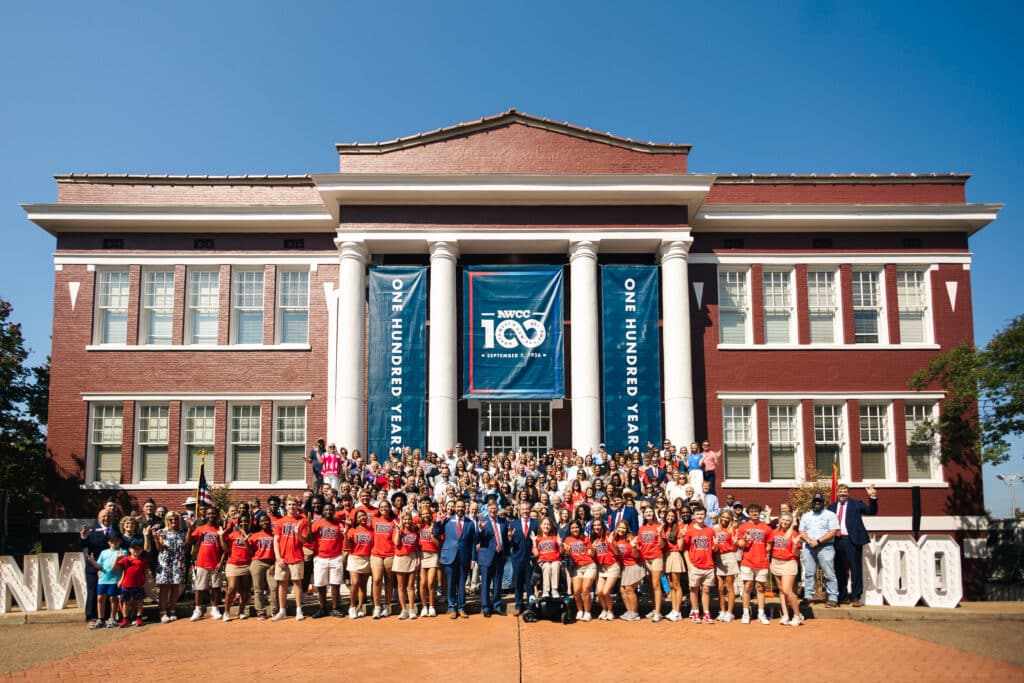
Photo courtesy of Northwest Mississippi Community College
Under the new format, students who are enrolled in math courses attend class every day (instead of three days a week). This means students still receive plenty of in-person instruction time while completing two required courses in one semester, speeding their progress toward graduation. Students also have access to support through Northwest’s Math Lab, a free walk-in tutoring center, and Brainfuse, a 24/7 online tutoring service available through the college’s learning management system (LMS).
Rush says Northwest is already seeing promising progress on its goal: In the 2022–23 academic year, college-level math completion rose to 26.5% (up from 22.5% in 2020–21, when the SEM plan was instituted).
Support inside and outside the classroom
During the Rural Resiliency initiative, Northwest added another layer of academic support for students: The college established a new Advising and Retention Center (ARC). Designed to help students with academic advising, class registration, transfer counseling, and other academic needs, the ARC has been especially beneficial for students who need support over the summer, a period when faculty advisers are typically less available. By bridging this gap in services to offer year-round support, Rush says, the ARC has already meaningfully improved outcomes at Northwest, including graduation rates.
“In various ways, it has helped us be more attentive, meeting the students where they are. And it has really improved our campus culture,” Rush said.
Northwest has also been using early detection software, integrated into the college’s LMS, that uses critical indicators in a student’s academic journey — like missed classes or late assignments — to help staff and faculty understand when a student may need more support.
Northwest’s combination of teaching and learning innovations and strengthened student supports has affected campus culture, but it has also made a quantitative impact on the college: Fall-to-fall retention has increased from 57.5% in 2021 to 68% in 2025, exceeding Northwest’s goal in its SEM plan, an improvement Rush attributes at least in part to the ARC.

Photo courtesy of Northwest Mississippi Community College
Leadership and collaboration
Committed leadership is one of four key conditions for success that ATD and its research partner, Education Northwest, identified during the Rural Resiliency initiative, and it has been a cornerstone of the transformative work at Northwest Mississippi Community College.
Rush points to the college’s shared governance structure as an essential part of the policy and culture that have supported continued transformation. From the Executive Council to four separate councils that include faculty, staff, stakeholders, and students, Northwest intentionally brings people from all over the college ecosystem into decision-making processes.
“Anything that we need to talk about before it comes to the executive council or the president’s cabinet, it’s been in those councils,” Rush said. “We try to have great communication and great collaboration across the college.”
Collaboration also played an important role in Northwest’s partnership with ATD throughout the Rural Resiliency initiative. Learning from the ATD cohort of peer colleges, along with tools and support from ATD coaches, helped Rush and her colleagues think differently about preparing students for the digital economy. That thinking took shape internally through Northwest’s own Digital Literacy Skills Committee, formed to carry the work forward in the college’s specific context.
“It really encouraged me to think about how we’re preparing our students for the digital age,” she said.
Throughout its work with the Digital Literacy Skills Committee, Northwest implemented a number of early interventions to increase students’ access to digital resources. Based on information gathered from a digital skills assessment administered to students, Northwest began offering laptops and internet hotspots to check out through the library. The college also began including more information about technology during orientation, which parents often attend alongside new students, to promote digital literacy from the beginning and help families set students up for success.
“Our work with ATD allowed us to really dig in,” Rush added. “I appreciated the cohort that we were with, the coaches that we had, going to DREAM, and just learning more about how to support our students — particularly our students with barriers, and exploring how to close those gaps so our students can continue to be successful.”
This blog post is part of a series that celebrates the work of seven rural colleges that participated in ATD’s Building Resiliency in Rural Communities for the Future of Work initiative, first launched in 2020. Through coaching, tools, and peer learning opportunities, the initiative aimed to strengthen institutional capacity, foster a culture of evidence, advance equitable student success, align programs with workforce needs, and prepare students for careers in the digital economy.

 Thinking & Advocacy

 Research & Reports