 Stories & Case Studies

Contra Costa College (CCC) has served a diverse community of learners in San Pablo, California, for more than 75 years. Recently, an ambitious professional learning initiative has made transformative changes to policies, programs, and culture on campus — changes that may ripple beyond the Bay Area and across California’s institutions.
When CCC joined the ATD Network as part of an initiative now known as the Accelerating Student Success Outcomes cohort, college leadership set out to strengthen data literacy among staff and faculty. This goal arose in part from the college’s participation in the Institutional Capacity Assessment Tool (ICAT) 2.0, which identified Data Empowerment — one of seven essential capacities for colleges to create a culture that promotes student success — as an area of growth.
“As we create programs and expand services to serve our community, it’s impossible to know how we’re impacting students if we don’t collect data,” said Kimberly R. Rogers, Ph.D., president of CCC.
At the same time, the college was facing new constraints in state and federal funding. As a federal Hispanic-Serving Institution grant concluded, for example, the number of dedicated research staff working for CCC dropped from two to one. The college had to find ways to do more with less.
“That was a real challenge,” Rogers said. “How do we expand data literacy, transparency, and access with fewer institutional resources?”
CCC’s answer to that question was to launch the Comet Data Academy.
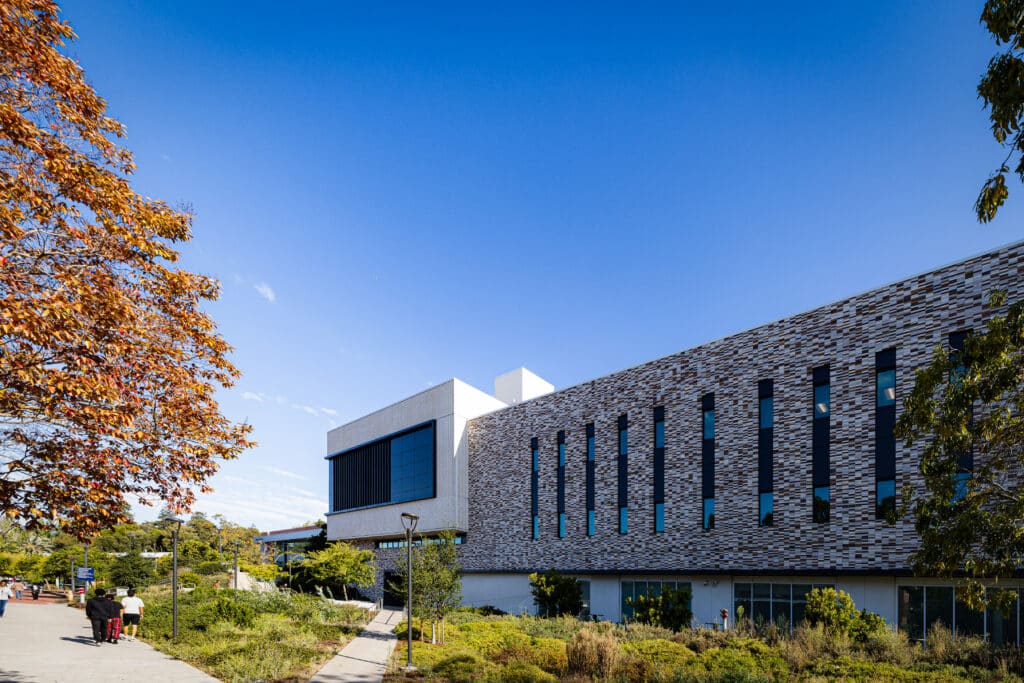
Photo courtesy of Contra Costa College
Creating a foundation for change
The Comet Data Academy aims to shift the CCC campus from “data-passive consumers” to “data-active investigators” by making data empowerment a hands-on learning experience for faculty and staff. Chosen participants complete asynchronous pre-reading in Canvas and then join six collaborative, in-person discussions that follow the PACE (plan, analyze, construct, execute) model of learning. From the first session to final presentations, participants learn how to frame questions, use data sources, interpret findings, and present results.
The team developing the Data Academy knew they would have to work hard to get people engaged and generate buy-in. Chao Liu, Ph.D., former interim dean of research and planning (and incoming Dean of STEM) and project lead for the Comet Data Academy, said that before the academy launched, he was doing prep work to build interest, sending emails across the college that shared useful insights while priming colleagues to consider the importance of data to their daily work.
“We wanted to build a culture where people really understand the value of data,” said Liu.
CCC also secured grant funding from the California Community Colleges Institutional Effectiveness Partnership Initiative (IEPI) that made it possible to offer stipends to eligible faculty and staff who participated in the academy. That compensation element was key, according to President Rogers.
“We wanted to recognize the time and labor commitment involved in doing this work,” she said. “It is essential to our continued success.”
The first cohort kicked off in 2025 and comprised 22 people, including three managers and a roughly even mix of faculty and staff, from a broad and representative range of departments and disciplines. This diversity was intentional: Rather than making data literacy the responsibility of a few people, the academy’s cross-campus collaboration encouraged a democratic approach and planted seeds for a more widespread culture of active “investigators.”
Kenyetta Tribble, vice president of equity and student services, highlighted how a diversity of viewpoints and expertise was prevalent not just in the cohort of participants, but also in the team that developed the curriculum.
“We had our distance education coordinator as one of the leads in developing, we had classified professional staff that helped to develop it,” Tribble said of the Data Academy leadership. “Participants really respected that it was built by their peers.”
The Data Academy uses the book You Are a Data Person: Strategies for Using Analytics on Campus by Amelia Parnell as its foundational text — a recommendation from ATD Data Coach Laurie Heacock. Tribble said the book has been a useful foundation to help participants understand what kind of a “data person” they are and to get more comfortable with the idea of data empowerment.
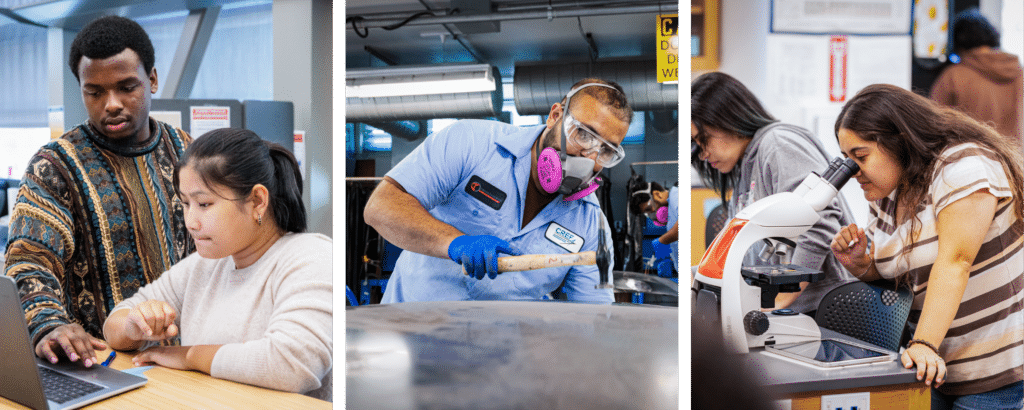
Photos courtesy of Contra Costa College
Immediate impacts, cultural transformation
The Comet Data Academy culminates in a capstone project, where individuals or teams use the tools they’ve developed to address a real issue they’re facing on campus. This format, Liu said, is ideal for helping participants engage with the whole process of understanding and using data, from inquiry to action plan to execution.
These projects are having tangible effects on both pedagogy and holistic student supports across campus. Liu recalled the capstone project of an English faculty member, who had noticed significantly different success rates among roughly 10 sections of the same course. The faculty member anonymized the data and presented it to his colleagues, inviting them to share ideas and learn from each other.
One academy participant, investigating the high rate of no-shows for Student Services appointments, found that scheduling meetings 10 days out instead of 30 days out helped increase student participation: No-shows dropped from 758 (11%) to 463 (8.1%) from one semester to the next. In another project, an IT staff member examined data from CCC’s Chromebook lending program to more accurately project budgeting needs. The college quickly allocated funds to maintain and strengthen the rental program.
“It was almost immediate,” President Rogers reflected. “We now have a replacement schedule for the Chromebooks in the library ready to go, and it’s all a result of that one project.”
The Comet Data Academy has made a cultural impact as well. Faculty and staff are gaining confidence in their use of data, building trust in each other, and often proactively leading initiatives to address challenges in their departments.
Tribble said the relationships and conversations between colleagues in the Comet Data Academy have helped to build stronger relationships between departments, which is increasing effectiveness across the institution.
“It created a culture of ‘we care,’” Tribble said. “And now, because we have this care in common, what can we do to make things improve?”
Liu recently attended a Student Success Committee meeting where two staff members brought strong data into a presentation on their work. These staff members had not participated in the Data Academy.
“Their work is wonderful,” Liu said. “You can see people starting to value data and what it can help us to understand. Things have been changing in our college.”

Photo courtesy of Contra Costa College
Scaling change for student success
The second cohort of the Comet Data Academy is now underway, and CCC’s ambitions for it are growing. Participants this year are working in larger groups, and their collaborative capstone projects are designed to tie directly into goals outlined in the college’s five-year strategic educational plan.
“We wanted to see if we can have this academy be almost like a research center of the college, where we can bring institution-wide projects into the Academy to study them,” Liu said.
Academy leaders are exploring how this community of practice can expand its data capacity beyond quantitative measures. In late October 2026, an outside expert will join a Data Academy session to talk about the importance of adding qualitative components — particularly student voice — to the data work. President Rogers said this line of inquiry was inspired by CCC’s participation in the Accelerating Student Success Outcomes cohort: Early in the partnership, ATD coaches held focus groups with CCC students, which directly informed changes in college operations and procedures.
Leaders are also considering how they can implement the program as a professional learning course in Canvas, where more people can enroll and participate asynchronously in the future. And interest is growing beyond CCC’s campus: Its sister colleges in the Contra Costa Community College District want to adopt the Data Academy model at their own institutions. President Rogers hopes to see not just the district but the whole state adopting the Comet Data Academy model.
“We want people to know that this is replicable, it’s scalable,” Rogers said. “We want you to borrow our curriculum and modify it to suit your institution. This is not about us. It’s about the impact we’re having in our communities, how we’re setting our citizens up for success.”
The positive impacts of this initiative have gained official recognition: The Comet Data Academy and CCC have been selected as finalists for the 2027 Bellwether Award in the Planning, Governance and Finance category. But more importantly to CCC’s leaders, its effects are felt all over campus, from English classrooms to the library to the Student Services office, and especially in a growing culture of inquiry in which every faculty and staff member with a stake in student success is empowered to ask questions, use evidence, collaborate, and make data-informed decisions.
Rogers and her colleagues are eager to see just how far those impacts can spread.

 Research & Reports


 Thinking & Advocacy